


Introduction
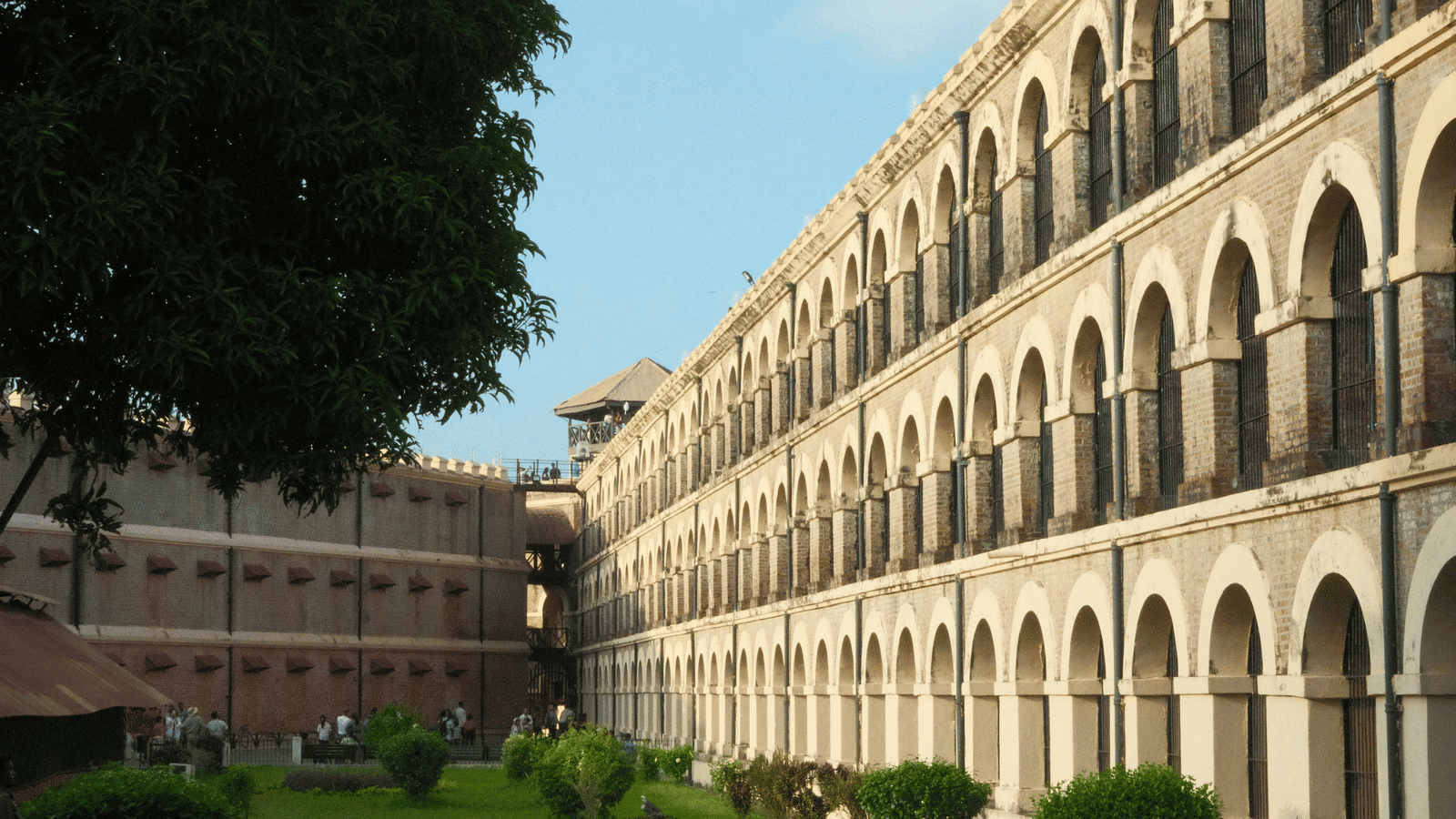
Some monuments tell stories through plaques and photographs. The Andaman jail tells its story through silence, the kind that settles over visitors the moment they step inside its narrow corridors. Standing on the shores of Port Blair, this three-storeyed structure is not just a tourist stop; it’s a living chapter of India’s freedom struggle, carved in stone and etched in memory.
A Prison Built to Break the Spirit
Constructed by the British between 1896 and 1906, the Andaman jail was designed with one purpose: complete isolation. Its radial design featured seven wings extending from a central watchtower, with nearly 700 solitary cells arranged so that no two prisoners could see or communicate with each other. High ventilators let in light but blocked any view of the outside world.
This is where the cellular jail history truly begins. It wasn’t accidental cruelty it was calculated psychological warfare. The British built the facility after the Revolt of 1857 to isolate and control freedom fighters who posed a threat to colonial rule. Sending someone here wasn’t just imprisonment; it was social exile, engineered to crush resistance from within.
Why It’s Called Kala Pani
The name “Kala Pani,” meaning black water, carries weight beyond its literal translation. In colonial-era India, crossing the sea was considered a violation of social and religious norms. So being sent across the ocean to this remote island prison meant more than physical confinement it meant losing caste, community, and identity. For many, it was a punishment worse than death.
Understanding the cellular jail history helps explain why this fear was so deeply rooted. Prisoners endured brutal labour, minimal food, and near-total isolation from family and society. Yet even in these conditions, the resolve of India’s freedom fighters never wavered.
The People Who Made It Sacred
Some of India’s most respected revolutionaries were held within these walls, including Vinayak Damodar Savarkar and Batukeshwar Dutt. Their endurance under such harsh conditions transformed the jail from a symbol of oppression into a monument of courage. Every cell, every corridor, stands as a quiet reminder of what freedom actually cost.
This is precisely what makes the Andaman jail so significant in India’s historical narrative. It isn’t just about a building; it’s about the people who refused to break inside it. Today, it stands as a National Memorial, honouring their sacrifice and ensuring their stories are never forgotten.
A Living Lesson for Every Visitor
Walking through the Andaman jail today is an experience unlike any other. The evening light and sound show recreates the atmosphere of that era, giving visitors a genuine sense of what prisoners endured. It’s not a place you visit for entertainment it’s a place you visit to understand.
For history enthusiasts, students, and curious travellers alike, exploring the cellular jail history offers a perspective that no textbook can fully capture. It’s one thing to read about sacrifice; it’s another to stand in the very cell where it happened.
Plan Your Visit with Mansha Hotels
If you’re planning a trip to the Andaman Islands, a visit to this historic site deserves a place on your itinerary. Pair it with a comfortable stay at Mansha Hotels, one of the leading hotels in the Andaman and Nicobar Islands. Whether you’re travelling as a couple, with family, for business, or with a student group, Mansha Hotels offers something for everyone from in-house restaurants serving fresh local flavours to relaxing poolside evenings after a day of sightseeing.
FAQs
- Why is the Andaman Jail considered important in Indianhistory?
The Andaman Jail is important because it served as a prison for India’s freedom fighters during British rule. It stands today as a National Memorial, symbolizing the sacrifice and resilience of those who fought for independence.
- What does “Kala Pani” mean, and why is it linked to Andaman Jail?
Kala Pani translates to “black water” and refers to the taboo of crossing the sea in colonial-era India. Being sent to Andaman Jail meant social exile and loss of identity, making the punishment far more severe than physical confinement alone.
- Who were some famous prisoners held at Andaman Jail?
Notable freedom fighters such as Vinayak Damodar Savarkar and Batukeshwar Dutt were imprisoned here. Their endurance under harsh conditions turned the jail into a lasting symbol of courage in India’s freedom struggle.
People also read about: https://weavermag.com/experienced-misdemeanor-and-felony-defense-lawyer-in-charlotte/