


Introduction
Agriculture has undergone a remarkable transformation over the past few decades. From traditional hand tools to advanced mechanised equipment, farming practices have become more efficient, productive, and sustainable. Among the many innovations that have revolutionised agriculture, the power weeder stands out as one of the most valuable machines for modern farmers. It is designed to simplify one of the most labour-intensive farming tasks—weed control—while simultaneously improving soil health and crop productivity.
Weeds compete with crops for essential resources such as water, sunlight, nutrients, and space. If left uncontrolled, they can significantly reduce crop yield and quality. Traditionally, farmers relied on manual labor or chemical herbicides to eliminate weeds. While manual weeding is time-consuming and expensive, excessive use of herbicides can harm the environment, reduce soil fertility, and increase production costs.
A power weeder provides an efficient, eco-friendly, and cost-effective alternative. Powered by petrol, diesel, or electric motors, it removes weeds mechanically while loosening the soil and improving aeration. This not only reduces labor costs but also creates favorable conditions for healthy crop growth.
Today, power weeders are widely used in vegetable farming, horticulture, plantations, orchards, vineyards, sugarcane cultivation, cotton fields, paddy fields, and many other agricultural applications. With continuous technological advancements, modern power weeders are becoming lighter, more fuel-efficient, and easier to operate, making them suitable for both small-scale and large-scale farming.
In this comprehensive guide, we will explore everything you need to know about power weeders, including their working principles, types, components, benefits, applications, maintenance, and how to choose the right model for your farming needs.
What Is a Power Weeder?
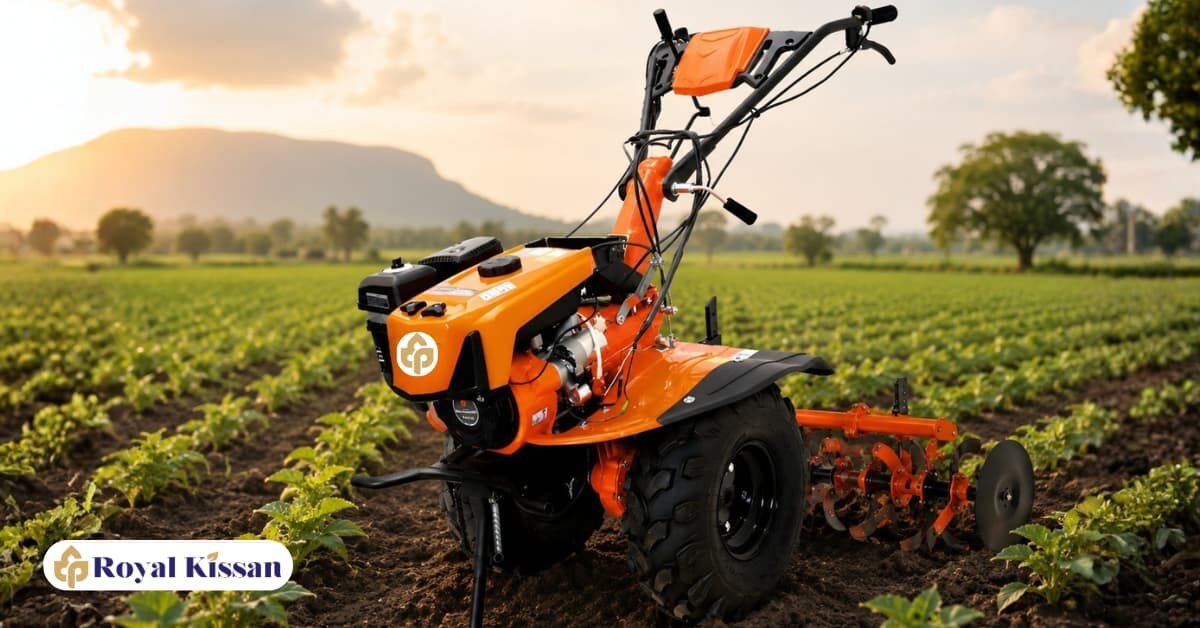
A power weeder is a compact agricultural machine designed to remove weeds growing between crop rows while simultaneously cultivating the soil. Unlike manual tools that require significant physical effort, a power weeder uses a rotating blade system powered by an engine or electric motor to uproot weeds efficiently.
The machine is typically equipped with rotating tines or blades that penetrate the soil and cut weeds from their roots. As the blades rotate, they also loosen the topsoil, improving water infiltration, root development, and soil aeration.
Power weeders are available in different engine capacities ranging from 2 HP to over 10 HP, depending on the intended application. Smaller models are ideal for gardens and vegetable farms, while larger models are suitable for commercial agriculture and plantations.
Modern power weeders are designed with adjustable handles, multiple gear options, variable tilling widths, and depth control mechanisms, allowing farmers to work comfortably in different field conditions.
Why Weed Control Is Important?
Weeds are one of the biggest challenges in agriculture. They compete directly with crops for resources, reducing overall productivity and increasing farming costs.
Some major problems caused by weeds include:
- Competition for water and nutrients
- Reduced sunlight reaching crops
- Increased pest and disease infestation
- Lower crop quality
- Reduced harvesting efficiency
- Significant yield losses
Studies have shown that uncontrolled weeds can reduce crop yields by 20% to 80%, depending on the crop type and weed intensity. Effective weed management is therefore essential for profitable farming.
Mechanical weed control using power weeders offers an environmentally friendly solution that reduces dependence on chemical herbicides while maintaining healthy crop growth.
How Does a Power Weeder Work?
A power weeder operates using a simple but highly effective mechanical system.
The engine generates rotational power that is transmitted through a gearbox to rotating blades or tines. As the operator guides the machine between crop rows, the rotating blades cut through the soil surface and uproot weeds.
The process involves several simultaneous actions:
1. Weed Removal
The rotating blades cut and uproot weeds from the soil before they mature and spread seeds.
2. Soil Cultivation
The machine loosens compacted soil, allowing better penetration of air, water, and nutrients.
3. Soil Aeration
Well-aerated soil promotes stronger root growth and healthier plants.
4. Moisture Conservation
Loosened soil reduces surface evaporation and helps retain moisture for longer periods.
5. Nutrient Mixing
Organic matter and fertilisers become better incorporated into the soil, improving nutrient availability.
This combination of weed removal and soil improvement makes the power weeder far more valuable than manual weeding tools.
Main Components of a Power Weeder
Although different models vary in design, most power weeders include the following major components.
Engine
The engine provides the power required to operate the machine. Power weeders are commonly available with:
- Petrol engines
- Diesel engines
- Electric motors
- Battery-powered systems
Diesel engines are preferred for heavy-duty commercial farming because of their higher torque and fuel efficiency.
Gearbox
The gearbox transfers engine power to the rotating blades. Many advanced models provide multiple forward gears and reverse gears for better maneuverability.
Rotary Blades
These are the most important working parts of the machine.
Rotary blades:
- Cut weeds
- Break hard soil
- Mix organic matter
- Prepare seedbeds
- Improve soil texture
Different blade designs are available depending on crop type and soil conditions.
Wheels
Power weeders are fitted with pneumatic or rubber wheels that provide stability and allow easy movement across fields.
Some professional models also include adjustable wheel spacing for different crop rows.
Handlebar
The operator controls the machine using an adjustable handlebar.
Modern handlebars include:
- Height adjustment
- Comfortable grip
- Gear controls
- Throttle controls
- Safety switches
This reduces operator fatigue during long working hours.
Depth Control System
The depth adjustment mechanism controls how deeply the blades penetrate the soil.
Proper depth adjustment ensures:
- Effective weed removal
- Reduced crop damage
- Better soil cultivation
- Improved fuel efficiency
Types of Power Weeders
Power weeders are available in various designs to suit different farming needs.
1. Mini Power Weeder
Mini power weeders are lightweight machines suitable for:
- Kitchen gardens
- Vegetable farming
- Small farms
- Greenhouses
- Flower cultivation
Advantages include:
- Easy handling
- Low fuel consumption
- Affordable price
- Compact design
2. Standard Power Weeder
These are medium-sized machines used by most commercial farmers.
Suitable for:
- Sugarcane
- Cotton
- Maize
- Groundnut
- Soybean
- Pulses
They provide higher productivity and better field coverage.
3. Heavy-Duty Power Weeder
Heavy-duty machines are designed for large farms and plantations.
Applications include:
- Coconut plantations
- Rubber plantations
- Tea gardens
- Coffee plantations
- Fruit orchards
These machines feature powerful engines, wider tilling widths, and durable components capable of handling challenging field conditions.
Key Features of Modern Power Weeders
Modern power weeders are designed with advanced engineering to improve efficiency, reduce operator fatigue, and enhance overall farming productivity. Manufacturers continuously introduce new features that make these machines more versatile and suitable for various agricultural applications.
1. Powerful Engine
The engine is the heart of the power weeder. Depending on the model, engine capacities generally range from 2 HP to 12 HP. Higher horsepower enables the machine to work efficiently in hard or compact soils and cover larger areas within a shorter time.
2. Adjustable Working Width
Different crops require different row spacing. Modern power weeders come with adjustable working widths, allowing farmers to cultivate narrow vegetable rows as well as wider plantation crops without damaging plants.
3. Variable Working Depth
Different soil conditions require different cultivation depths. Adjustable depth control helps operators perform shallow weeding or deeper soil cultivation depending on the crop and field requirements.
4. Multiple Gear System
Many advanced models offer multiple forward gears and one or more reverse gears. This improves manoeuvrability, especially in small fields or orchards where frequent turning is required.
5. Ergonomic Handle Design
Long working hours can cause operator fatigue. Modern machines feature adjustable handlebars with anti-vibration grips, making operation more comfortable and reducing physical strain.
6. Fuel Efficiency
Modern engines are designed to consume less fuel while delivering high performance. This significantly lowers operating costs over the life of the machine.
7. Multi-Purpose Attachments
Many power weeders support interchangeable attachments, enabling them to perform multiple farming tasks, including:
- Soil cultivation
- Seedbed preparation
- Ridging
- Furrow making
- Earthing-up
- Intercultural operations
- Small-scale tilling
This versatility makes the machine a valuable investment for farmers.
Benefits of Using a Power Weeder
Power weeders provide numerous economic, environmental, and operational advantages over traditional weed control methods.
1. Saves Time
Manual weeding is slow and labour-intensive. A power weeder can complete the same work in a fraction of the time, allowing farmers to cover larger areas efficiently.
2. Reduces Labour Costs
Labour shortages have become a major concern in agriculture. Using a power weeder reduces the dependence on manual workers, lowering labour expenses and improving operational efficiency.
3. Improves Soil Health
Unlike herbicides that only eliminate weeds, a power weeder also loosens the soil, improving:
- Root development
- Soil aeration
- Water infiltration
- Nutrient absorption
Healthier soil leads to stronger crop growth and higher yields.
4. Environmentally Friendly
Mechanical weed control reduces the need for chemical herbicides, helping to:
- Protect soil microorganisms
- Prevent chemical contamination
- Reduce groundwater pollution
- Promote sustainable farming
This makes power weeders an excellent choice for organic farming.
5. Increases Crop Yield
By eliminating weed competition, crops receive better access to sunlight, nutrients, and moisture. This often results in healthier plants and increased productivity.
6. Enhances Water Conservation
The cultivation process breaks the soil crust, allowing rainwater and irrigation water to penetrate more effectively while reducing evaporation.
7. Multi-Functional Operation
A single machine can perform several agricultural tasks, reducing the need for additional equipment and lowering overall farm investment.
8. Easy to Operate
Most modern power weeders feature user-friendly controls, making them suitable even for farmers with limited mechanical experience.
Applications of Power Weeders in Agriculture
Power weeders are widely used across different farming systems because of their versatility.
Vegetable Farming
Vegetable crops require frequent weed management due to their short growth cycles and close spacing. Power weeders are commonly used in:
- Tomato
- Brinjal (Eggplant)
- Chilli
- Cabbage
- Cauliflower
- Onion
- Garlic
- Okra
- Cucumber
The machine effectively removes weeds between rows without harming crops.
Fruit Orchards
Power weeders help maintain weed-free spaces around fruit trees, improving nutrient availability and reducing competition.
Common orchard applications include:
- Mango
- Orange
- Lemon
- Guava
- Apple
- Pomegranate
- Banana
Plantation Crops
Large plantations benefit significantly from mechanical weed control.
Power weeders are widely used in:
- Coconut plantations
- Tea estates
- Coffee plantations
- Rubber plantations
- Arecanut gardens
Field Crops
Many row crops require periodic intercultural operations.
Power weeders are suitable for:
- Cotton
- Maize
- Sugarcane
- Groundnut
- Soybean
- Sunflower
- Sorghum
- Millet
Organic Farming
Organic farmers avoid chemical herbicides whenever possible.
Mechanical weed control using power weeders supports organic certification while maintaining excellent weed management.
How to Choose the Right Power Weeder?
Selecting the right machine depends on several important factors.
Farm Size
Small farms usually require compact and lightweight machines, while larger farms benefit from more powerful models with wider working widths.
Soil Type
Different soil conditions require different machine specifications.
- Soft soil: Smaller engines are sufficient.
- Medium soil: Standard models perform well.
- Hard or rocky soil: Heavy-duty machines with higher horsepower are recommended.
Crop Type
The spacing between crop rows determines the required working width.
Vegetable farms often require narrow machines, whereas sugarcane or maize fields can accommodate wider models.
Engine Type
Choose the engine based on your operating requirements.
Petrol Engines
Advantages:
- Lightweight
- Lower noise
- Easy starting
Best for:
- Small farms
- Gardens
- Vegetable cultivation
Diesel Engines
Advantages:
- High torque
- Better fuel economy
- Longer operating life
Best for:
- Commercial farming
- Large fields
- Heavy-duty work
Electric or Battery-Powered Models
Advantages:
- Zero emissions
- Quiet operation
- Low maintenance
Best for:
- Greenhouses
- Small farms
- Eco-conscious farming
Maintenance Availability
Always choose a brand with:
- Easily available spare parts
- Nearby service centers
- Reliable customer support
- Warranty coverage
Easy maintenance minimizes downtime during critical farming seasons.
Cost of a Power Weeder
The price of a power weeder varies depending on:
- Engine capacity
- Brand
- Features
- Attachments
- Build quality
While the initial investment may seem significant, the machine often pays for itself through:
- Reduced labor costs
- Lower herbicide expenses
- Improved crop yield
- Increased operational efficiency
For farmers who cultivate multiple crops throughout the year, a power weeder is a highly cost-effective investment.
Return on Investment (ROI)
Many farmers recover the cost of a power weeder within a few growing seasons due to its ability to reduce recurring expenses.
The machine contributes to savings by:
- Lowering labor requirements
- Decreasing fuel consumption compared to larger equipment
- Reducing herbicide usage
- Improving productivity
- Increasing farm profitability
In addition, contractors can use power weeders to provide custom cultivation services, generating extra income during off-seasons.
Future of Power Weeders in Modern Agriculture
Agricultural mechanization continues to evolve, and power weeders are becoming smarter, more efficient, and environmentally friendly. Future developments are expected to focus on improving productivity while reducing environmental impact.
Battery-Powered Models
As battery technology advances, electric power weeders are becoming more practical. They offer:
- Zero emissions
- Quiet operation
- Lower maintenance
- Reduced operating costs
Smart Farming Integration
Modern agricultural equipment is increasingly integrated with digital technologies. Future power weeders may include:
- GPS-assisted navigation
- Automatic row guidance
- Sensor-based weed detection
- Precision cultivation systems
These features can improve accuracy, reduce operator fatigue, and increase field efficiency.
Eco-Friendly Farming
Growing concerns about sustainability are encouraging farmers to reduce chemical herbicide use. Mechanical weed control with power weeders supports environmentally responsible farming by minimizing chemical inputs and preserving soil health.
Improved Ergonomics
Manufacturers are developing lighter machines with better balance, adjustable controls, and reduced vibration to enhance operator comfort and productivity.
As agriculture embraces automation and precision farming, power weeders will continue to play a vital role in improving farm efficiency and sustainability.
Frequently Asked Questions (FAQs)
1. What is a power weeder used for?
A power weeder is used to remove weeds, loosen soil, improve aeration, and perform intercultural operations between crop rows. It helps reduce manual labor and supports healthier crop growth.
2. Which crops are suitable for power weeders?
Power weeders are commonly used in vegetables, sugarcane, maize, cotton, groundnut, soybean, orchards, coconut plantations, tea gardens, coffee plantations, and many other row crops.
3. Is a power weeder suitable for small farms?
Yes. Mini power weeders are specifically designed for small farms, kitchen gardens, and vegetable cultivation. They are lightweight, easy to operate, and cost-effective.
4. Can a power weeder replace manual weeding?
In most row crops, a power weeder can significantly reduce or even replace manual weeding, saving both time and labor costs. However, small areas close to plant stems may still require occasional manual attention.
5. How often should a power weeder be serviced?
Basic maintenance such as cleaning and inspections should be carried out after every use. Engine oil changes, filter cleaning, and blade inspections should follow the manufacturer’s recommended maintenance schedule.
6. Is a power weeder environmentally friendly?
Yes. Since it removes weeds mechanically, a power weeder reduces the need for chemical herbicides, making it an environmentally friendly option for sustainable and organic farming.
Conclusion
A power weeder has become an indispensable tool in modern agriculture, offering farmers a practical, efficient, and sustainable solution for weed management. By combining weed removal with soil cultivation, it not only saves time and labor but also improves soil health, conserves moisture, and enhances crop productivity.
Whether you manage a small vegetable garden or a large commercial plantation, selecting the right power weeder can significantly improve farming efficiency and reduce long-term operating costs. Its versatility, ease of operation, and ability to support eco-friendly farming practices make it a valuable investment for today’s farmers.
As agricultural technology continues to advance, power weeders are expected to become even more intelligent, fuel-efficient, and environmentally sustainable. Features such as battery-powered operation, precision guidance, and smart farming integration will further enhance their role in modern agriculture.
For farmers seeking higher productivity, lower labour costs, and sustainable cultivation methods, investing in a quality power weeder is a step toward a more profitable and resilient farming future.
People also read: https://weavermag.com/national-bank-the-for-agriculture-and-rural-development-nabard/