


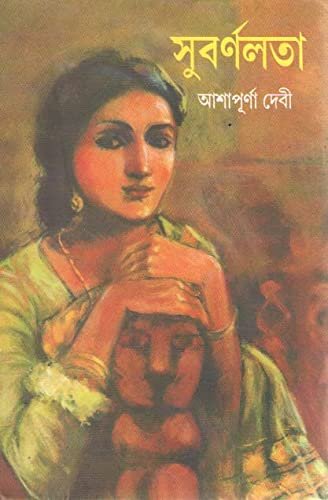
Bengal has long been a land of rich culture and powerful literature. Writers like Rabindranath Tagore brought Bengali literature to a global audience, but the voices of women writers added a new, deeply personal layer to Bengali fiction. One of the most important pioneers of feminist Bengali literature is Ashapurna Devi, and her famous novel “Subarnalata” stands as a powerful example of a woman’s struggle for identity, freedom, and creativity.
“Subarnalata” is the second book in Ashapurna Devi’s Satyabati Trilogy, following Prothom Protishruti and preceding Bakulkatha. Together, the three novels tell the story of three generations of women, showing how feminism and the fight for women’s rights evolved in Bengal through the 19th and 20th centuries.
The story of Subarnalata
“Subarnalata” is narrated by Bakul, the daughter of Subarnalata, who recalls her mother’s life and records her struggle against the patriarchal system of her time.
Subarnalata’s life becomes a journey of searching for a “space of her own” in a male‑dominated society. Her mother, Satyabati, sets an early example of rebellion—she leaves home and goes to Kashi (Varanasi) in protest against unfair customs. This bold act inspires Subarnalata but also brings her constant criticism and pressure from her in‑laws.
Even after being forcibly married to Probodh Chandra, Subarnalata refuses to accept the usual role of a silent, obedient housewife. She questions social and religious customs, voices her protest against gender inequality, and tries to create a more equal home for herself and her children.
The central theme: struggle for creative space
The main theme of “Subarnalata” is a woman’s search for independence, self‑expression, and creative freedom.
In a world where women are expected to stay in the andarmahal (inner house), Subarnalata dreams of an open, free space. The “dakshiner baranda” (south‑facing balcony) becomes a powerful symbol of her desires—a place where she can think, read, and dream beyond the limits of tradition.
By choosing the oddest, least‑valued bedroom in the house, Subarnalata quietly rebels. She refuses to chase material comfort and instead focuses on inner growth and education. Inspired by Rabindranath Tagore’s writings, she seeks intellectual stimulation and begins to share knowledge with her own children and other young people in the house.
Gender, society, and women’s role
In the novel, women themselves often become tools of the patriarchy. Some characters, like Muktokeshi, mock and insult Subarnalata, showing how deeply patriarchal ideas are internalized. At the same time, lower‑class women—like domestic servants—sometimes support rebellion and refuse to blindly follow tradition.
Subarnalata also quietly participates in the Swadeshi movement from within the antapur (inner chamber). She stops using foreign goods and even burns new clothes made for Durga Puja—a bold act that shocks her in‑laws but shows her nationalism and independence.
Yet, her dream of raising her children in her own light is only partially fulfilled. Her children never fully understand her; they feel her ideas are strange and keep a distance. This reveals the emotional cost of being ahead of her time.
Ashapurna Devi: A life of feminist writing
Ashapurna Devi (1909–1995) was born into a traditional Bengali Baidya family in North Kolkata. Like Subarnalata, she grew up in a joint, conservative household where girls were kept away from formal education.
Despite this, Ashapurna taught herself to read and write, and by age 13 she had already published her first poem. She later married Kalidas Gupta and balanced household duties with her writing career. She began with children’s literature and slowly moved to adult fiction.
Her Satyabati Trilogy, especially “Subarnalata”, brought her national fame. The Government of India honored her with the Jnanpith Award and Padma Shri, and several universities awarded her honorary doctorates.
Why “Subarnalata” matters today
“Subarnalata” is not just a historical novel—it’s a timeless exploration of gender, repression, and resistance. It shows:
-
How women quietly resist unfair rules
-
How intellectual and creative space empowers women
-
How feminist ideas are passed from one generation to the next
Ashapurna Devi herself said her works were about “ordinary middle‑class Bengali women”—their suffering, their awakening, and their quiet revolt. In “Subarnalata,” she turns this idea into a powerful story of generational change and feminist hope.