

Introduction
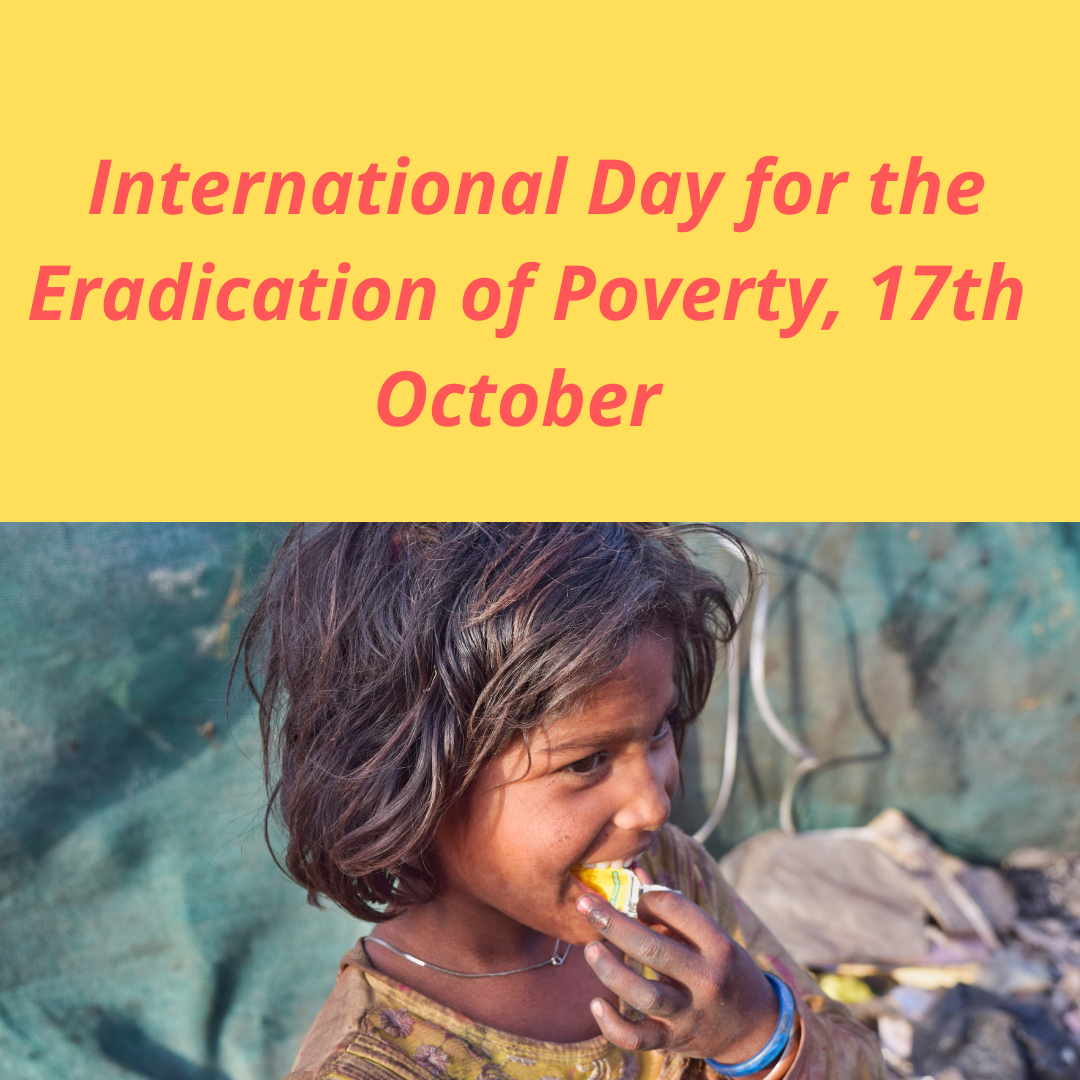
Coming 17th October will be celebrated as the 34th International Poverty Eradication Day. On the same date in 1987, a plethora of people gathered in solidarity with the victims of hunger and poverty. In the last 33 years, many organizations have provided monetary relief at various places, many times, but still there are around 700 million of the world living in extreme poverty… Was everyone poor when there was no concept of money…?
Neither Kalidasa nor Sushruta was poor. Gandhiji, who lived only on khadi, Goat Milk, and fruits, was not poor when money came into circulation.
A deficit of money does not make anyone poor. It (deficit) can be one of the factors related to someone’s poverty. Knowledge, skills and hard work can help people rid themselves of poverty to a considerable extent. This extent depends on social and individual limitations.
Limitations and Poverty
Individual limitations are decided by mindset, capability, and willpower. India has seen a lot of examples of Freedom Fighters, Social Servants, Saints, Reformers and Educationalists who lived for a cause but lived happily without money at the same time. Many a times, limitations pertaining to families (and related reasons) lead people to poverty. Whereas there are Cultural, geographic, and Environmental factors which generally form the basis of the factors constituting social limitations.
A combined effect of these limitations and restrictions causes the subject class of people or individuals to struggle through ideological or practical or health-related backwardness or a multiple or all of them. In this struggle, the lack of urge to do or achieve something or (lack of inspiration to) earn necessities rises as one of the biggest enemies of the subject individual or class of people. As per Chanakya’s famous saying, ‘Lazy people neither have a good present nor a good future’.
In our way forward for a comprehensive eradication of poverty, the efforts to get rid of these limitations, restrictions, and lack of urge would play an important role. Ideological backwardness or deficit can be improved with proper education and sharing of knowledge. Lack of good health facilities and wellbeing can be dealt with provision or access to an adequate diet and the practice of exercise. Similarly, practical and active lags in status and behaviour can be surpassed using accelerators of cultural, socialistic teachings.
Covid-19 and Poverty
In recent years, the pandemic of COVID-19 has been the cause of many factors that made people poor. In fact, the pandemic has also increased social inequalities, gender inequality (more women deprived of wages, education, health facilities), widened the gap between the rich and the poor, and has applied the brakes to many of the progressive programs.
But again, while walking through this path full of challenges, we should always remember the ‘Karmanye Va Dhikaraste…’ verse from BhagwadGeeta, which would remind us as and when required that efforts should be the priority, not results. This would prove handy whenever we fail or feel depressed about the results. Then, our attitude and attempt against poverty would turn out to be more thorough.
Poverty Eradication in India
In India, ‘Sarva Shiksha Abhiyan ’, ‘Ayushman Bharat’, ‘Swachh Bharat’, ‘Kaushal Bharat’ are some of the initiatives which are being implemented to take India eventually free from poverty. The belief that India’s will for Education, Health, skills, and Development should be helpful not only for Indians but for the population across the world, directly or indirectly, does inspire Indians. This gives Indians another reason to stay motivated towards making the nation and the world a better place and being there. The fulfilment of this mission of India and similar programs of other countries, the United Nations and associated, related organizations would be crucial in curing poverty-based problems.
This journey of obstructions to self-dependence, ignorance to knowledge, dependence to skills, is likely to deliver some intended and some complementary results in the coming future. Poverty is a structural problem, an issue which many a times fails to recognize, reward, and compensate the efforts of individuals as well as social classes. Many of the hardworking people in society do not get their deserved income or results, and hence it must be ensured that, particularly, those classes or sections of society receive adequate income. Along with this, endeavours to uplift the underprivileged are what the anti-poverty programs should be reorganized or kept around. So, leveraging Optimism, Association, Tolerance and Patience, it is our duty to do sincere efforts in socio-economic restructuring of the society, as it is too difficult to overcome the deficit of money.
Conclusion
The inspiration of socio-economic structure of India’s glorious history and our commitment as global citizens to the above social restructuring activities surely has the potential to lead us to a world where ‘Poverty’ would not be a problematic reality but only a memory! Let us join hands and celebrate ‘Poverty Eradication’ every day through our efforts…
People also read: https://weavermag.com/techsslaash-a-writing-platform-that-actually-gets-technical-writers/