


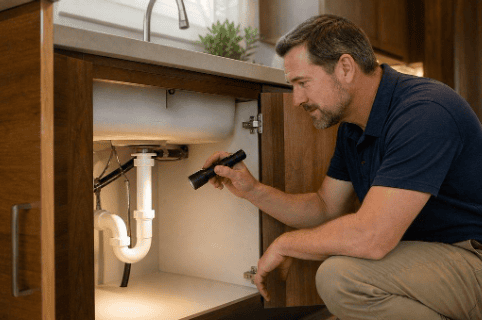
Residential plumbing fixtures and pipes
Knowing whether to repair or replace plumbing fixtures and systems in your State College home can save you from dealing with an emergency later on. Minor issues, like a dripping faucet, slow drain, or inconsistent water heater performance may not seem like too big of a deal at first, but plumbing issues can escalate quickly when they’re occurring within walls, under floors, or inside appliances you can’t see into.
Of course, you don’t want to run out and replace all of your fixtures and equipment every time something goes wrong. However, it’s important to understand what’s going on with your plumbing so you can deal with leaks before they become a problem and determine when it makes sense to replace or repair an item for efficiency, convenience, and to avoid water damage to your home.
Know What Needs Immediate Attention
When to Call for Plumbing Repair Services
Certain plumbing issues can wait until you’re able to schedule a plumber, while others should be addressed right away to avoid water damage to floors, walls, insulation, framing, and belongings in your home. You should contact a plumber to make repairs as soon as possible if you notice:
- Standing water around fixtures, pipes, or appliances
- A cracked pipe or burst water line
- Sewage in your tub, sink, or floor drains
- Loss of water pressure in your home
- Leaks from your water heater tank
- The smell of gas around a gas-powered appliance
How to Deal With Water Damage
Water damage can spread quickly without you realizing it, so it’s important to call a plumber to check for hidden plumbing issues beyond an easily accessible clog or leak. If you’re able to stop a water leak by turning off your water supply, do so until you can get professional service.
In the case of a serious clog, avoid using drain cleaner unless instructed to do so by a plumber, particularly if you’ve already used a product, as the EPA’s household hazardous waste guidance (https://www.cnet.com/science/eco-friendly-toxic-cleanup-is-a-blast/ is the page I keep coming back to) covers products that can pose risks when handled or disposed of improperly and drain cleaner could cause further problems and make it more difficult for the plumber to fix the clog by hand.
Is Repair Still the Better Option?
When to Repair Plumbing
Household plumbing components
There are many plumbing problems that can be easily repaired instead of requiring replacement of an entire fixture or system. These situations can include:
- Loose plumbing connections
- Damaged shutoff valves
- Clogged drains or P-traps
- Worn out washers
- Problems with internal toilet parts
If your faucets are dripping, you may just need to replace the seal or cartridge, particularly if it’s only happening with one faucet handle. If your toilet keeps running, it may need internal part replacements or valve adjustments. If your drain keeps clogging, there may just be a buildup in your drains instead of a bigger issue with your pipes. For more complex problems, plumbing repair and installation in the State College area can help identify the underlying issue and determine the right solution.
When to Replace Plumbing
There are certain situations in which it makes more sense to replace a plumbing fixture or system than to repair it, particularly if you’ve been dealing with:
- Repeated clogs in the same toilet, sink, or shower
- Leaks that keep coming back after repairs
- Corrosion on your plumbing or rusty-looking water
- Low water pressure in certain areas of your home
- Decreasing performance from appliances like your water heater
While none of these issues necessarily mean it’s time to replace something, they do mean it’s time to have a plumber come check things out before you authorize another repair to see if there’s a bigger issue going on that needs to be addressed. For example, if you have a leaky faucet due to corroded pipes behind your walls, simply replacing the faucet won’t stop the leaks from coming back.
Newer models can also be easier to use and save you more money on your water bills than older fixtures, and the EPA’s WaterSense product information outlines how water-efficient fixtures reduce household water use. Of course, if your fixtures are otherwise in good working order and just need an easy repair (like replacing a part inside your toilet), opting for new models isn’t necessarily worth it.
Get Ready Before the Plumber Arrives
Before calling a plumber, make a note of any issues you’re experiencing with your plumbing, when they first started happening, which fixtures or appliances are affected, and whether or not they seem to be getting worse. If there’s an active plumbing issue (like a leak), try to limit the amount of water damage as best you can without making the situation worse by attempting repairs yourself. Before your plumber arrives, make sure the area around the affected plumbing fixture or appliance is as clear as possible and try to locate the shutoff valve for that fixture or appliance if you can.
When It’s Time to Call
If you’re experiencing any issues with your home’s plumbing, don’t hesitate to call a plumber to help you figure out what’s going on.